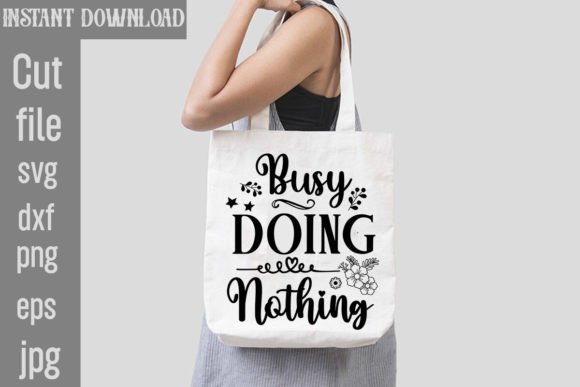
Reviewing the Busy Doing Nothing SVG Cut File
As a designer who spends half my life digitizing patterns and the other half stitching them out, I have learned to look past the glossy preview images. We all know that what looks crisp on a screen can sometimes turn into a tangled mess of thread breaks and puckering on fabric. When I first encountered the Busy Doing Nothing SVG Cut File, my initial reaction was one of cautious curiosity. The phrase itself carries a specific mood—a blend of irony, relaxation, and modern minimalism. But does it translate well from a digital graphic into a tangible, stitched reality? After putting this design through its paces on various textiles and hoop sizes, I am ready to share my practical assessment for fellow embroidery designers, Etsy sellers, and craft entrepreneurs.
First Impressions and Visual Personality
The aesthetic of this design is deceptively simple. It relies on clean lines and balanced typography, which is often where machine embroidery designs fail. Complex scripts or overly dense illustrations can look muddy after stitching, but this piece thrives on negative space. The layout suggests a casual, laid-back vibe, making it an ideal candidate for lifestyle products rather than formal wear. When viewing the included files—specifically the SVG for Cricut and the DXF for Silhouette—the vector paths appear smooth. This is crucial because jagged vectors in your cutting software often translate to uneven satin stitches or poor registration in your embroidery software if you are using the shape as a basis for digitizing.
For those of us working in Crafts and Graphics, the inclusion of a high-resolution PNG with a transparent background at 300 DPI is a significant bonus. It allows for quick mockups without needing to open heavy vector software. I used this PNG to visualize the design on a heather grey sweatshirt and a natural canvas tote. The contrast held up well in both scenarios, suggesting that the line weight is substantial enough to remain visible even from a distance.
Real-World Application: The Tote Bag Test
To truly evaluate the Busy Doing Nothing SVG Cut File, I decided to apply it to a project that sees heavy use: a custom canvas tote bag. This is a staple item for small shop owners and boutique brands. I chose a medium-weight cotton canvas, which provides a stable base for embroidery. Since this is a cut file package, I imported the SVG into my embroidery software to convert the shapes into stitch types. I opted for a combination of satin stitch for the borders and a light fill stitch for any larger solid areas, ensuring the stitch density remained low to prevent the fabric from warping.
The result was surprisingly professional. The text remained legible, and the overall composition felt intentional rather than slapped on. For an Etsy seller looking to expand their handmade product line, this design offers a quick turnaround time. It does not require hours of complex color changes or intricate applique design work. This efficiency is vital for maintaining profit margins in a craft business. The design’s simplicity means it appeals to a broad audience, from college students to busy parents who appreciate the humor in "doing nothing."
Navigating Fabric Challenges and Stitch Clarity
While the design performed well on canvas, I would advise caution when using it on stretchy or textured fabrics. On a thin jersey t-shirt, the lack of inherent structure in the lettering could lead to distortion if not properly stabilized. I recommend using a cut-away stabilizer for garments that will be washed frequently. For sweatshirt embroidery, the loft of the fleece can sometimes swallow smaller details. However, since this design relies on bold, clear shapes, it holds up reasonably well on thicker materials, provided you adjust your needle penetration settings.
One area where designers must be vigilant is the corner detail. If you are scaling the Busy Doing Nothing SVG Cut File down for a baby embroidery project, such as a onesie or a small bib, ensure that the sharp angles do not become too tight. Tight corners can cause thread bunching. I tested a smaller version on a cotton burp cloth, and while it looked cute, I had to increase the pull compensation slightly to keep the edges crisp. For caps or curved surfaces, this design might require a specialized backing and careful hooping to avoid shifting, as the horizontal layout can distort if the fabric is not drum-tight.
Commercial Viability and Brand Consistency
From a business perspective, this asset fits seamlessly into a catalog of personalized gift items. It works exceptionally well for holiday embroidery gifts, particularly for the person who claims they just want to relax during the festive chaos. The versatility of the file formats—SVG, DXF, EPS, and PNG—means you can use this single purchase across multiple platforms. You can create physical embroidered patch products, print-on-demand apparel, or even digital printable mockup assets for your online store listings.
However, before listing finished items, it is imperative to review the licensing terms associated with the download. While the package includes files suitable for cutting machines like Cricut and Silhouette, using them for commercial embroidery requires clarity on whether the license covers mass production or limited handmade sales. Always verify these details to protect your small shop product integrity. Assuming the license permits commercial use for finished goods, this design adds value through its relatability. Customers are increasingly drawn to items that reflect their personal mindset, and this design captures a popular cultural sentiment.
Practical Designer Notes for Best Results
If you plan to integrate the Busy Doing Nothing SVG Cut File into your workflow, keep these technical tips in mind:
- Test on Scrap First: Always run a test stitch-out on the same fabric type you intend to use for the final product. This helps you gauge the necessary thread colors and tension settings.
- Check Contrast: Use the included PNG to preview how the design looks on dark versus light backgrounds. You may need to add a white underlay or choose contrasting thread colors to ensure visibility on navy or black fabrics.
- Monitor Stitch Density: If you are digitizing the SVG yourself, avoid over-packing the fill stitches. A lighter density preserves the softness of the fabric and reduces the risk of puckering, especially on tote bag design projects.
- Hoop Size Selection: Ensure your chosen hoop size accommodates the full width of the design with adequate margin. Crowding the design near the edge of the hoop can lead to flagging and misalignment.
- Verify File Compatibility: While the package provides standard vector and image formats, remember that you will need to convert these into your machine’s specific embroidery format (such as PES, DST, or JEF) using your preferred digitizing software.
In conclusion, the Busy Doing Nothing SVG Cut File is a versatile and practical addition to any designer’s library. It bridges the gap between digital design assets and tactile finished product creation with ease. Whether you are creating custom apparel for a local boutique or crafting unique holiday gifts for friends, this design offers a reliable foundation. Its strength lies in its simplicity, allowing the quality of your stitching and the texture of your fabric to take center stage. For the modern maker, it represents an efficient way to produce high-quality, emotionally resonant items that customers love to buy and wear.