Reviewing the Dog Hair is My Glitter Design for Embroidery
As a designer who has spent years digitizing and stitching thousands of projects, I have learned that not every graphic translates well to thread. We often see trendy T-Shirt Designs that look fantastic on a screen but fail miserably under the needle. Today, I am taking a close, practical look at the Dog Hair is My Glitter T-Shirt Design. This piece falls under the category of typography-based Graphics, and while it is marketed broadly for print-on-demand items like mugs and signs, my focus here is strictly on its viability as a machine embroidery design for real-world craft business applications.
First Impressions: Mood and Visual Personality
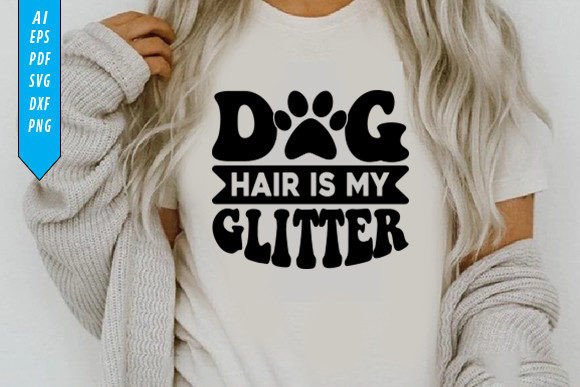
The phrase "Dog Hair Is My Glitter" immediately sets a tone of playful defiance and affectionate humor. It appeals directly to the devoted dog owner who wears their pet’s presence with pride rather than annoyance. Visually, this is a typography-driven layout. In embroidery, text is unforgiving. Unlike a printed ink layer, thread has physical height and texture. My first impression of this design concept is that it relies heavily on legibility and clean lines. If the original vector or digital file has jagged edges or overly thin serifs, it will cause registration issues during stitching. However, assuming the digitization is handled with care, the mood is lighthearted and relatable, making it an excellent candidate for personalized gifts and boutique merchandise.
Real-World Application: From Screen to Stitch
To truly evaluate this design, I imagine placing it in a live production scenario. Let’s say I am preparing a custom order for a local boutique selling high-end pet accessories. I choose a heavy-weight canvas tote bag as the base. The Dog Hair is My Glitter T-Shirt Design needs to hold its own against the coarse weave of the canvas. Here, the choice between a satin stitch and a fill stitch becomes critical. For the letters, a dense satin stitch might offer a shiny, "glitter-like" effect if using metallic or high-sheen rayon thread, but it risks snagging on the rough fabric. A tatami fill stitch would be more durable and lie flatter, ensuring the text remains readable without puckering the bag.
Another common use case is sweatshirt embroidery. A fleece or French terry cloth provides a soft background that contrasts nicely with crisp lettering. In this context, the design serves as a statement piece on the chest or sleeve. Customers looking for custom apparel often want something that sparks conversation. This quote does exactly that. It transforms a standard garment into a handmade product with personality. For Etsy sellers, this kind of relatable content drives engagement because it taps into a specific, passionate niche: dog lovers.
Navigating Technical Challenges and Fabric Constraints
While the sentiment is universal, the execution requires technical vigilance. Typography designs are particularly sensitive to hoop size and fabric stability. If you are attempting to stitch this on a curved surface, such as a cap or a baby onesie, you must account for distortion. Small hoop sizes can limit your ability to use large stabilizers, which are essential for preventing pull-out in stretchy fabrics. I advise testing the design on scrap fabric first, especially if you are working with thin materials like tri-blend tees or delicate stationary items like cloth napkins.
Dark fabrics present another challenge. If the design relies on subtle shading or fine details, it may get lost on black or navy blue garments. In such cases, using a bright, contrasting thread color is non-negotiable. White, gold, or neon pink threads can make the text pop, reinforcing the "glitter" metaphor. However, avoid using actual metallic thread for the entire design unless your machine is specifically tuned for it, as metallic threads are prone to breaking and can frustrate both the maker and the buyer if the finished product sheds or breaks after washing.
Considerations for Small Details and Density
One must carefully inspect the small details of the typography. Are there tiny dots over the 'i's or intricate loops in the letters? In embroidery, these micro-elements can become nests of tangled thread if the stitch density is too high or if the needle size is inappropriate. I recommend reviewing the design in a simulation software before stitching. Check for excessive jump stitches and ensure that the running stitch outlines are tight enough to prevent gaps. If the design includes any decorative accents beyond the text, ensure they do not overcrowd the lettering. Clarity is king in typography embroidery.
Enhancing Brand Value and Customer Trust
For small shop owners and creative entrepreneurs, the quality of the stitch reflects directly on brand consistency. A poorly stitched Dog Hair is My Glitter T-Shirt Design can look amateurish, undermining customer trust. Conversely, a clean, well-executed embroidery project elevates the perceived value of the item. It turns a simple quote into a premium handmade product. When customers see consistent tension, no puckering, and vibrant thread colors, they are more likely to leave positive reviews and return for future purchases. This design, when executed correctly, supports professional presentation and enhances giftability.
Furthermore, using this design in printable mockups for your online store can help visualize the final product before you commit to production. Showcasing the design on various items—such as aprons, pillow covers, or even framed textile art—can broaden your appeal. It demonstrates versatility, showing buyers that this isn't just for t-shirts but for any surface where thread can adhere.
Practical Notes for the Embroidery Designer
Before you load this design into your machine, take a moment to verify the technical specifications. Since the product description mentions it is a digital asset for various uses, confirm whether you are receiving a native embroidery file format compatible with your machine (such as PES, DST, or JEF). Do not assume compatibility. Check the recommended hoop size; if the design is large, you may need a 5x7 or larger hoop to avoid re-hooping, which can lead to alignment errors.
- Test on Scrap: Always stitch a test run on similar fabric to check for puckering or thread breaks.
- Stabilizer Choice: Use a cut-away stabilizer for stretchy fabrics like t-shirts and a tear-away for stable woven fabrics like tote bags.
- Thread Contrast: Ensure high contrast between thread and fabric for maximum readability.
- Licensing Check: Confirm the license terms. Can you sell finished items made with this design? Most commercial embroidery files allow this, but always verify to protect your craft business.
- Wash Testing: Wash the finished product to ensure the threads do not bleed or shrink disproportionately to the fabric.
In conclusion, the Dog Hair is My Glitter T-Shirt Design holds significant potential for embroidery projects when approached with technical precision. It is not merely a graphic; it is a tactile experience that requires thoughtful digitization and careful stitching. For the experienced designer, it offers a chance to play with texture and shine, turning a humorous quote into a cherished keepsake. For the hobbyist, it serves as a fun, manageable project that yields impressive results. By respecting the limitations of thread and fabric, you can transform this digital asset into a successful, tangible product that resonates with dog lovers everywhere.